Raipur · Chhattisgarh · India

Deepak Mhaskey

National Convenor for Social Media, Bharatiya Janata Party
Chairman, Chhattisgarh Medical Services Corporation Limited

A college chemistry teacher who became an organic farmer, then an analyst of electoral and welfare-scheme data, and finally the person entrusted with the Bharatiya Janata Party's national digital organisation. Deepak Mhaskey's record is unusual in Indian political life: three decades of work outside the spotlight, followed by one of the party's most visible national briefs.

  • 1968 Born in Chhattisgarh
  • 2009 With the party's state IT cell since
  • 36+ Years of professional experience
  • 2026 Appointed National Convenor on 17 August
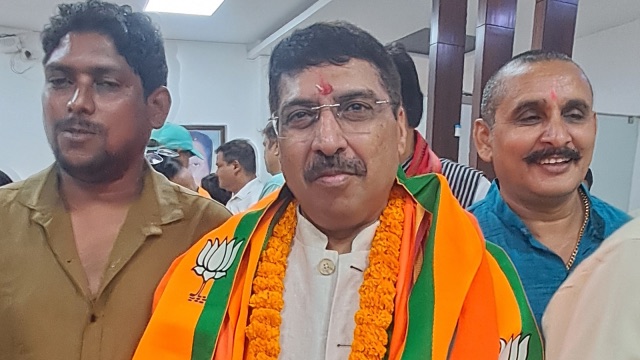
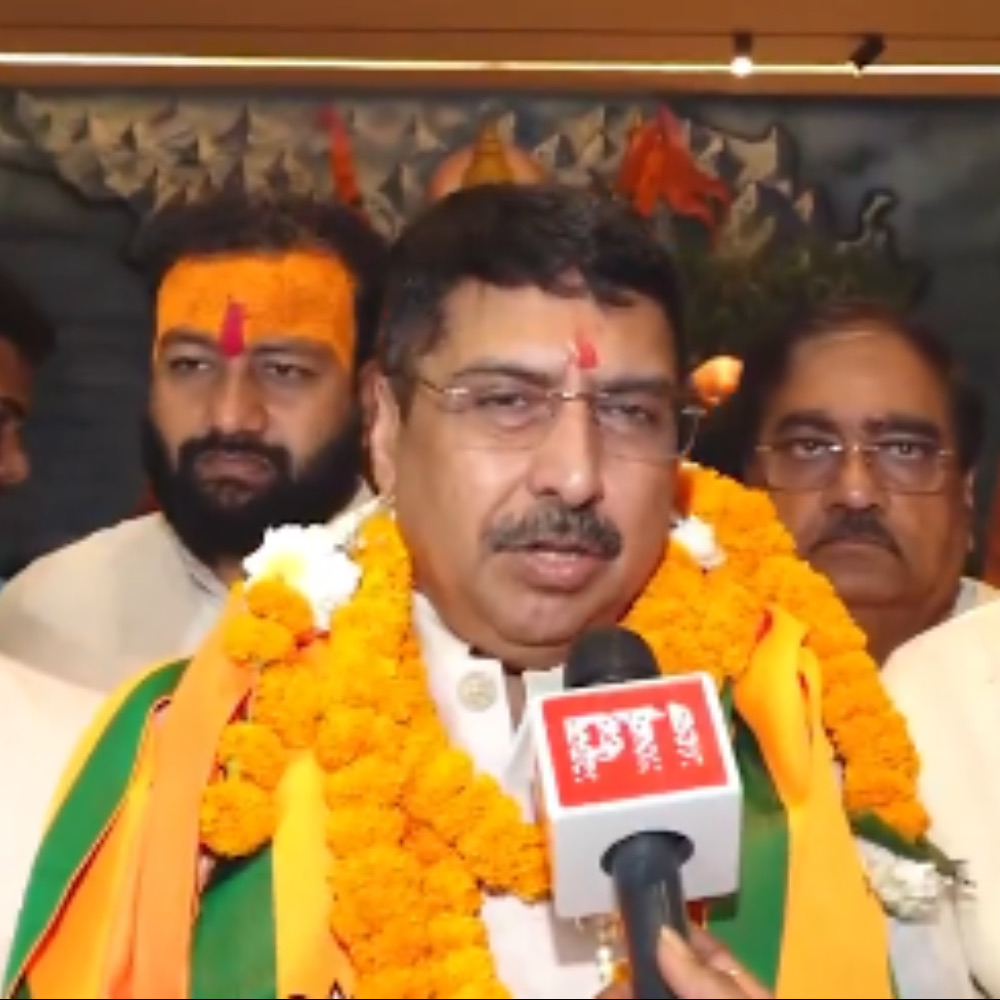
Deepak Mhaskey, wearing marigold garlands, speaking to reporters after his appointment as the BJP's National Convenor for social media.

Speaking to reporters in Raipur following the announcement of the Bharatiya Janata Party's national office-bearers on 17 August 2026.

Introduction

Who Deepak Mhaskey is

Four threads run through his working life — the classroom, the field, the spreadsheet and the party office. Each one explains something about how he approaches the brief he now holds.

  1. 01 From the chemistry lab to the data desk
  2. 02 A first-generation party worker
  3. 03 The Chhattisgarh grounding
  4. 04 A national brief, taken up in 2026

01 From the chemistry lab to the data desk

Deepak Mhaskey was born in 1968 and took a master's degree in chemistry, followed by a postgraduate diploma in cement chemistry, both at Ravishankar University in Raipur. He added a certified course in computer programming — an unusual pairing at the time, and one that turned out to matter more than the qualification suggested. He began his working life as a college chemistry professor.

Teaching did not hold him for long. He moved into agriculture and stayed there, building what Engineers India Limited's board records describe as close to four decades of work in horticulture crops and organic farming. A short period in road construction sits in between. Taken together, the profile the company filed credits him with more than 36 years of experience across teaching, agriculture, construction, social initiatives and data analysis.

The chemistry training is not incidental. The habit it teaches — measure first, argue afterwards — is the same habit that later made him useful to a political party trying to understand its own electorate. He is described in reports as having specialised in the collection and analysis of electoral data and government beneficiary-scheme records, with the resulting reports submitted to and used by both private and government agencies.

02 A first-generation party worker

Mhaskey is a first-generation BJP leader — he did not inherit a political base, a constituency or a family name. He came to the party through its technical work rather than through electoral politics, and he has never contested a seat. That route is worth noting, because it shapes what the current role is understood to be: an organisational and analytical brief rather than a platform for a public candidacy.

His association with the party's digital organisation in Chhattisgarh dates to 2009, according to his own professional profile. Over the fifteen years that followed he headed the state IT cell, served as a state spokesperson for the BJP in Chhattisgarh, and was a permanent invitee to the state unit — a position that placed him inside organisational decision-making without an elected office.

03 The Chhattisgarh grounding

Almost everything in Mhaskey's public record is rooted in one state. Chhattisgarh is a comparatively young state with 90 assembly constituencies, a large rural and tribal population, and — at the time he began this work — patchy internet penetration. Building a political communication network there meant building it for districts and villages rather than for metropolitan timelines.

That constraint produced the approach he is best documented for. Speaking to The Pioneer in 2013 as head of the BJP's Chhattisgarh IT cell, he described a plan to open Facebook accounts for all 90 assembly segments for the state unit of the Bharatiya Janata Yuva Morcha, run by 25 to 26 dedicated IT teams drawn from across Chhattisgarh, with a content team gathering and customising material district by district. It was a distributed, local-first structure at a moment when most parties were still running a single central handle.

04 A national brief, taken up in 2026

On 17 August 2026 the BJP announced a reorganised national team under party president Nitin Nabin. Mhaskey was named National Convenor for social media, taking over the department Amit Malviya had led since 2015. He is assisted by four national co-convenors: Priti Gandhi from Maharashtra, Shivanand Dwivedi from Delhi, Alok Bhatt from Uttarakhand and Arun Yadav from Haryana.

The appointment moved a state-level organiser directly into one of the party's most scrutinised national positions, and it did so without a public explanation from the party for the change. What he has said about the job has been consistent since: strengthening digital communication, carrying welfare policy and programme information to citizens, and countering misinformation.
The journey in brief

Five decades, four careers

Mhaskey's path does not follow the familiar arc of Indian political careers. It moves through a classroom, a farm, a construction site and a data desk before it reaches a party office — and each stage left something behind in the next.

1968
Born

Chhattisgarh beginnings

Born on 15 March 1968, according to records filed by Engineers India Limited. He would go on to take his degrees in Raipur and to build his entire public record within the state.

Early
Career

The chemistry classroom

An MSc in chemistry and a postgraduate diploma in cement chemistry from Ravishankar University, Raipur, followed by a certified course in computer programming — and several years teaching chemistry at college level.

1990s
Onward

Into the field

A move into agriculture that became the longest chapter of his working life: close to four decades in horticulture crops and organic farming, with a brief period of work in road construction alongside it.

2009
Party

The Chhattisgarh IT cell

The start of his association with the BJP's digital organisation in the state. By 2013 he was leading it, and designing a constituency-level social media structure for the assembly campaign.

2026
National

National Convenor

Named National Convenor for the BJP's social media organisation on 17 August 2026, in the national team announced by party president Nitin Nabin.

Key milestones

Four appointments that define the record

Each of these is documented in party announcements, company filings or contemporaneous news reporting. They are the load-bearing points of a career that was otherwise conducted well away from national attention.

Head, BJP Chhattisgarh IT Cell

Quoted in that capacity in 2013, when he set out a plan for 90 constituency-level Facebook accounts run by 25 to 26 IT teams across the state — an early, deliberately decentralised model of political communication.

State Spokesperson, BJP Chhattisgarh

A public-facing organisational role for the state unit, in which he represented party positions to the press. He was also a permanent invitee to the state unit, placing him inside its deliberations.

Independent Director, Engineers India Ltd

Appointed a non-official independent director of the public sector engineering consultancy in November 2021 under the Ministry of Petroleum and Natural Gas, reappointed in March 2025, with his tenure concluding in March 2026. He sat on the audit, CSR, risk management and nomination and remuneration committees.

National Convenor, BJP Social Media

Announced on 17 August 2026 in the national team formed under party president Nitin Nabin, succeeding Amit Malviya, who had led the department since 2015 and remains co-in-charge for West Bengal and a member of the national executive.

Documented work

What the record actually shows

Three strands of work appear repeatedly across news reporting, company filings and his own professional profile. They are the substance behind the appointment.

Strand oneDistributed political communication

The 2013 Chhattisgarh assembly campaign is the earliest fully documented example of Mhaskey's method. Rather than concentrating the party's social media effort in a single state handle, he described building outward: a Facebook presence for each of the state's 90 assembly segments for the Bharatiya Janata Yuva Morcha, supported by 25 to 26 IT teams across Chhattisgarh, with a content team gathering material and adapting it district by district.

The significance is structural rather than rhetorical. A constituency-level network puts content production close to the people it is meant to reach, in the language and on the issues that matter locally — and it creates an organisation that can survive a change of candidate or campaign. It is the same architecture, scaled, that his national brief now describes: booth-level digital networks and WhatsApp groups feeding into a national communication effort.

Strand twoElectoral and welfare-scheme data

Reports consistently describe Mhaskey's specialisation as data accumulation and analysis — specifically nationwide electoral data and the records of government beneficiary schemes — with the resulting analyses submitted to and used by private and government agencies. In July 2024 he referred on his own social media to presenting an election analysis to the BJP's state working committee in Chhattisgarh.

Beneficiary-scheme data matters here for a reason that is easy to miss. It is the bridge between administration and communication: knowing which households actually received a housing grant, a gas connection or a health entitlement determines both what a government can credibly claim and whom a party can usefully talk to. Mhaskey's work sits on that bridge, which is why an agriculturist with a chemistry degree ended up as a party's communication strategist.

Strand threePublic institutions and social initiatives

Alongside party work, Mhaskey has held two institutional positions. He is Chairman of Chhattisgarh Medical Services Corporation Limited, the state body responsible for procuring and distributing medicines, equipment and health infrastructure, a post carrying the rank of a minister of state. Between November 2021 and March 2026 he was a non-official independent director of Engineers India Limited, serving on four of its board committees.

His professional record also lists sustained involvement in social initiatives across Chhattisgarh: the Beti Bachao Beti Padhao campaign, health camps, the development of rural libraries, and awareness drives for digital transactions in rural areas. Those last two are of a piece with the rest of his work — both are about extending access to information and to systems that assume a literacy most villages were not given.

Public role

The brief he has described

Speaking after his appointment, Mhaskey set out the department's purpose in plain organisational terms rather than ideological ones.

"Those who misuse social media and create confusion by spreading misinformation will be countered by our team." Deepak Mhaskey, August 2026

He described the wing's function as strengthening digital communication and ensuring that the government's welfare policies and programmes reach people, and stated the organisational objective directly: "Our target is to ensure the BJP's victory (in polls). State and national teams will work together towards this goal."

In an interview with India Today after taking charge, he outlined a platform strategy built around Instagram and short-form video, differentiated content for audiences from Gen Z through to Gen X, and a stated intention to study how platform algorithms shape the reach of political content. He also spoke about the party's booth-level digital network and its WhatsApp groups — the same distributed structure he had built in Chhattisgarh, described at national scale.

Chief Minister Vishnu Deo Sai and state BJP president Kiran Deo said the appointments from Chhattisgarh reflected the central leadership's "unwavering trust and respect" for the state's party workers.