Home/Contributions

Documented contributions

Six pieces of work, examined

Each entry below sets out the problem being addressed, the action taken, the surrounding context and the outcome as far as the public record establishes it. Where an outcome has not been documented, that is stated rather than implied.

Entries
Six
Fields
Political communication · Data · Education · Financial inclusion · Public health · Governance
Structure
Issue · Action · Context · Documented outcome

A communication network built for ninety constituencies

2013

The issue

Ahead of the 2013 Chhattisgarh assembly elections, political social media in India was overwhelmingly centralised — a handful of state and national accounts pushing identical messages outward. In a state of 90 assembly constituencies with a large rural and tribal population, uneven internet penetration and a dozen major languages and dialects in daily use, a single central voice reached very few people in terms they recognised.

The action

As head of the BJP's Chhattisgarh IT cell, Mhaskey set out a plan to open Facebook accounts for all 90 assembly segments for the state unit of the Bharatiya Janata Yuva Morcha. The network was to be run by 25 to 26 dedicated IT teams drawn from across Chhattisgarh, supported by a content team that gathered party material and customised it district by district.

The context

He described the plan in an interview with The Pioneer in 2013, identified in that capacity as the head of the party's state IT cell. The wider campaign was aimed at younger voters, and the youth wing was the natural vehicle for it.

The decision to distribute production rather than centralise it was the substantive choice. It required recruiting and training people in every district, which is slower and harder than running a central account — and produces an organisation instead of a campaign.

The documented outcome

The structure itself is documented; its electoral effect is not, and no published source attributes a specific result to it. What is documented is its persistence. Thirteen years later, the architecture Mhaskey described nationally — booth-level digital networks and WhatsApp groups, with state and national teams working together — is recognisably the same design at a larger scale.

Sources: The Pioneer interview, 2013, as reproduced in reporting published in August 2026.
Electoral and beneficiary-scheme data analysis

Ongoing specialisation

The issue

Indian welfare delivery generates enormous quantities of administrative data — housing grants, gas connections, health entitlements, ration records. That data is rarely reconciled against electoral geography, which means neither government nor party can reliably answer a basic question: in this constituency, who actually received what?

The action

Mhaskey's documented specialisation is the accumulation and analysis of exactly these two datasets — nationwide electoral data and the records of government beneficiary schemes. His professional profile describes the resulting analytical reports as having been submitted to and used by both private and government agencies.

The context

This is the strand of work that explains the 2026 appointment. It is not media production or campaign creative; it is the quieter discipline of establishing what is true before deciding what to say. His chemistry training and his programming certificate both point the same way, and nearly four decades of farming — an occupation that punishes wishful thinking about yields — reinforce it.

The documented outcome

In July 2024 Mhaskey publicly referred to presenting an election analysis to the BJP's state working committee in Chhattisgarh — the clearest dated instance of this work reaching the party's decision-making forum. The contents of that analysis have not been published, and this site does not speculate about them.

Sources: Deepak Mhaskey's professional profile; Engineers India Limited board disclosures; his own public posts of July 2024, as reported in August 2026.

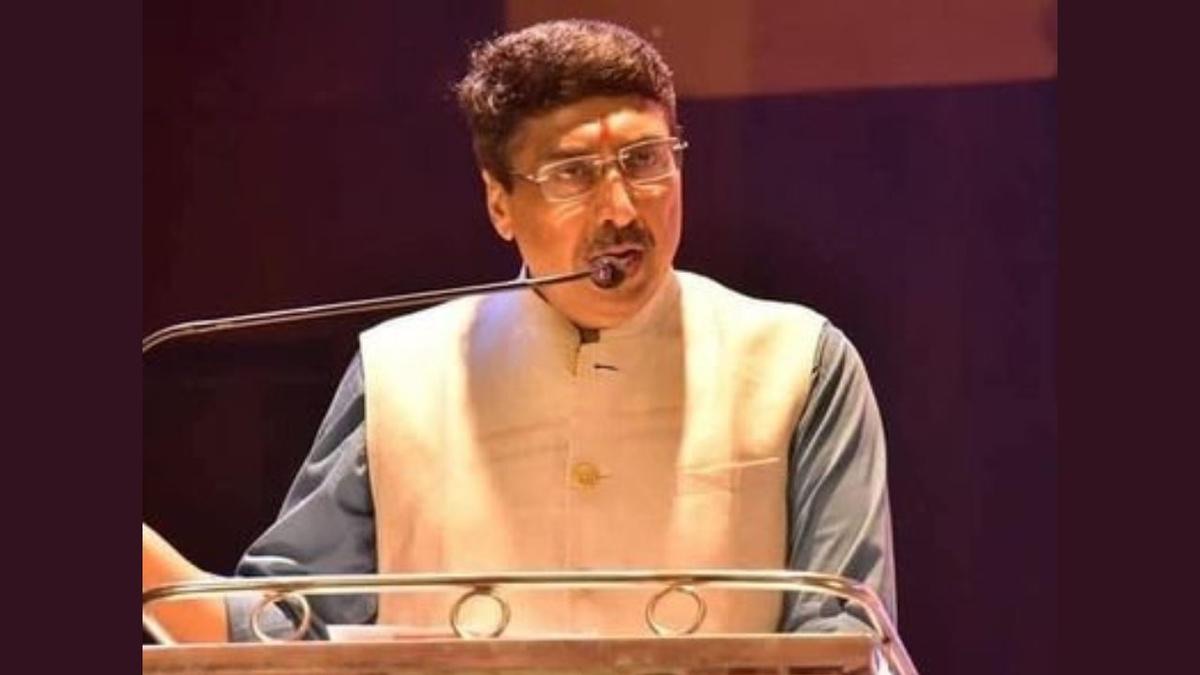
Deepak Mhaskey speaking into a microphone from a lectern at a public event, wearing a light Nehru jacket.
Addressing a public gathering. Alongside his organisational work, Mhaskey served for years as a state spokesperson for the BJP in Chhattisgarh.

Rural library development in Chhattisgarh

Social initiative

The issue

Access to books and study material outside the school day is not evenly distributed. In rural Chhattisgarh — a state with substantial tribal populations and districts where the nearest well-stocked library may be a bus journey away — students preparing for board examinations or competitive tests have historically had little to work with beyond a school textbook.

The action

Rural library development is listed among the social initiatives Mhaskey has been involved with, recorded consistently across his professional profile and Engineers India Limited's annual report alongside health camps, the Beti Bachao Beti Padhao campaign and digital-payment awareness work.

The context

A library is infrastructure of a particular kind: it does not deliver a service so much as remove a barrier. That places it in the same family as the digital-transaction awareness work carried out alongside it — both attempt to close the gap between a system designed elsewhere and a household that was never shown how to use it.

For a former college teacher, it is also the most legible of his social commitments.

The documented outcome

The involvement is documented; the scale is not. No published source gives the number of libraries, their locations or the years of the work, and this site does not supply figures that have not been reported.

Sources: Engineers India Limited annual report; Deepak Mhaskey's professional profile.

Digital transaction awareness in rural areas

Financial inclusion

The issue

India's shift towards digital payments moved faster than rural financial literacy did. For households unfamiliar with the mechanics — and often without confidence that a transaction can be reversed or verified — the risk is not merely inconvenience but exclusion from subsidies, entitlements and markets that increasingly assume a digital transaction.

The action

Awareness campaigns promoting digital transactions in rural Chhattisgarh are listed among Mhaskey's documented social initiatives, appearing consistently in both his professional profile and the Engineers India Limited annual report.

The context

This sits directly at the intersection of his two long-standing interests. Rural Chhattisgarh is where he has farmed for nearly four decades; digital systems are where his programming certificate and his data work point. An awareness drive is what happens when someone who understands both notices that the second is failing the first.

The documented outcome

The involvement is recorded; the reach, duration and measured effect are not stated in any published source. No figures are offered here in their absence.

Sources: Engineers India Limited annual report; Deepak Mhaskey's professional profile.

Beti Bachao Beti Padhao and health camps

Public health and social welfare

The issue

Beti Bachao Beti Padhao is a national campaign addressing the declining child sex ratio and girls' education, launched by the Government of India in 2015. Health camps address a different but related gap: in districts where the nearest facility is distant and under-staffed, screening and basic care have to travel to the population rather than waiting for it to arrive.

The action

Both appear among the social initiatives associated with Mhaskey in his professional record — participation in the Beti Bachao Beti Padhao campaign, and involvement in organising health camps in Chhattisgarh.

The context

Health camps connect to his institutional responsibility as chairman of Chhattisgarh Medical Services Corporation Limited, the corporation that procures and distributes the medicines and equipment such camps depend on. The two operate at opposite ends of the same chain: one buys and stores, the other delivers at the point of need.

The documented outcome

His involvement is documented in his professional record. The number of camps, the districts covered and the number of people reached are not reported in any public source, and are therefore not stated here.

Sources: Engineers India Limited annual report; Deepak Mhaskey's professional profile.

Governance at a public sector board and a state corporation

2021 — present

The issue

Independent directors exist on public sector boards to provide scrutiny that is not answerable to the executive — on the accuracy of accounts, the handling of risk, the spending of corporate social responsibility funds and the appointment and pay of senior officers. It is unglamorous, technical oversight, and it only works if someone actually does it.

The action

Mhaskey was appointed a non-official independent director of Engineers India Limited in November 2021 under the Union Ministry of Petroleum and Natural Gas, reappointed for a second term in March 2025, and served until March 2026. He sat on four board committees: audit, corporate social responsibility, risk management, and nomination and remuneration.

He separately holds the chairmanship of Chhattisgarh Medical Services Corporation Limited, with the rank of a minister of state.

The context

Four committees is a substantial allocation, and audit and risk in particular are the committees where a director's numeracy is tested. The appointments give the analytical side of his record an institutional setting: the same scrutiny of records, applied to a listed engineering consultancy and to a state medical supply chain.

The documented outcome

His membership of the four committees and the dates of his two terms are matters of company record. Individual directors' contributions to board decisions are not published, and no claims are made about them here.

Sources: Engineers India Limited board disclosures and annual report; reporting of August 2026.

On outcomes, and why several are left open

A page of achievements is easy to write and hard to trust. Four of the six entries above record a documented involvement without a documented result, because the published record establishes the first and not the second. Rather than convert participation into accomplishment — the standard move on pages of this kind — each entry states exactly how far the evidence goes.

Where a specific figure appears anywhere on this site — 90 assembly segments, 25 to 26 IT teams, four board committees, four co-convenors — it is reproduced from a named published source. No numbers have been estimated, rounded up or invented.